I am constantly encountering one grammatical error in unpublished manuscripts and even traditionally published books that I’d like to address here.
But before I answer that question, here are two definitions that will be useful in understanding this comma dilemma. The first definition is for “independent clause.” An independent clause is a string of related words containing a subject (a noun, pronoun, or proper name) and a verb (the action the subject is taking). This string of words can stand alone as a sentence. Example: My stomach grumbled. “Stomach” is the subject, “grumbled” is the verb.
The second definition is for “dependent clause.” A dependent clause is a string of related words containing a verb but CANNOT stand alone as a sentence. That last bunch of words following the “but” in the previous sentence is a dependent clause. Some sentences are simple independent clauses. Some sentences are two independent clauses connected by “and” or another conjunction (but, so, because, for). Some sentences pair an independent clause with a dependent clause. The two-independent clause sentence gets a comma before the conjunction for clarity. The independent clause + dependent clause sentence does not.
Let’s see some examples:
I made my lunch and stowed it in my backpack. (Independent clause plus dependent clause. In this case the “and” is connecting the two verbs carried out by the subject of the sentence – “made” and “stowed.”)
Test: Does “stowed it in my backpack” stand alone as a sentence? No, it is a dependent clause. The verb in the phrase refers back to the subject in the previous clause. The rule: Do not use a comma to separate the verb from its subject.
My mother packed my lunch, and I forgot it on the counter.
Test: Forget the fact that you should have made your lunch yourself – your mother has better things to do, can the two strings of words on either side of the “and” stand alone? Yes. The rule: Two independent clauses connected by “and” require a comma.
Now that you know the rules, try punctuating these sentences (I am not giving you the answers because I think now you know):
I entered the biology lab and realized it was frog-dissecting day.
Frogs croaked from every corner of the room and my stomach churned.
I was too upset to eat lunch so my tuna sandwich moldered in my backpack.
(The above is meant as a bit of a trick. I didn’t use “and” as the conjunction, I used “so.” Same rules apply.)
The kids kept their distance because my backpack stank.
(Another curve ball – instead of “and” or “so,” the conjunction is “because.” Same rules apply.)
I walked in the door and gasped to see ants swarming my forgotten lunch.
I was still hungry so I went to the deli.
The above sentence could be an exception to the rule: Both independent clauses are pretty short. You could probably leave the comma out.
And finally, every story needs a happy ending:
I couldn’t decide between turkey or salami so I ordered a salad instead
One other exception to the rule (English grammar is full of ‘em), is even if the independent clauses are short, you may need the comma for clarity. Example:
I picked up the stinky bag and the flies followed.
Wait! Did I pick up the bag AND the flies? No, “the flies” is the subject of the second independent-but-short clause. So, to avoid misreading, use the comma.
Once you apply these rules to that tricky comma before the “and” question, you will know the answer: Independent clause + independent clause, yes. Independent clause + dependent clause, no.
If you have any grammar questions you want parsed out, let me know! Now go have lunch!
Recently, I paid for a critique on a picture book story that I wrote epistolary style. Epistolary means it is written as a series of letters – so naturally the story will be first person.
I wasn’t worried about the style, as I knew there were quite a few PBs written that way, most notably, Drew Daywalt’s The Day the Crayons Quit, Troy Cummings’ Can I Be Your Dog, and Mark Teague’s Dear Mrs. LaRue series, and I also knew it was a successful format and the best format for the story I wanted to write. My concern for this particular work in progress was the concept.
The person who did the critique is a writer I admire and has written many books in the area I was writing in. Thankfully, they thought the concept was funny and worth pursuing. However, they wrote, they had never heard of any picture books written epistolary style except for one that was very old (and I cannot find in any library near me). And they suggested that I try a different style.
I was shocked, as were my critique partners when I mentioned this to them. They listed many more epistolary style picture books. Based on these conversations, research for comp titles on the internet, and a recent post in one of my Facebook groups for children’s writers, I have compiled a list of picture books written epistolary style. This includes letters, postcards, emails, diary entries, and alien spaceship logs. There are around 30 titles on this list but there are more than that as some of the authors have written series, follow ups, or other books in the same style. (I haven’t given a description or rating of them, nor included the illustrator, as you can find out more about these books on any of the sites for information on books and form your own judgments.)
I realize that as we navigate this world of picture book writing we have a tendency to look to those who have been multi-published for advice and support. But sometimes, the “expert” doesn’t have the answers we seek. Sometimes we just have to trust our own gut, do our own research, and believe that we are the only ones who can give ourselves the best advice.
And I think I just got an idea for a new picture book.
Happy writing!
Sincerely,
Marilyn
P.S. If you think of any book(s) I have left out, please let me know! Perhaps one day, I will add my own to the list!
The List:
Ada, Alma Flor: Dear Peter Rabbit (series) (Atheneum Books, 1997+)
Biedrzycki, David: Invasion of the Unicorns (Charlesbridge, 2021)
Brisson, Pat: Your Best Friend, Kate (Bradbury Press, 1989+)
Brooks, K.S.: Postcards from Mr. Pish (series) (Independent, 2016)
Cronin, Doreen: Diary of a (Worm, Spider, Fly) (HarperCollins, various dates)
Cummings, Troy: Can I Be Your Dog? (Random House, 2018)
Cummings, Troy: Is This Your Class Pet? (Random House, 2022)
Daywalt, Drew: The Day the Crayons Quit (Philomel Books, 2013)
Daywalt, Drew: The Day the Crayons Came Home (Philomel Books, 2015)
Dealey, Erin: Dear Earth … From your Friends in Room 5 (HarperCollins, 2020)
Evans, Christine: Dear Mr. G (Union Square Kids, 2023)
Falatko, Julie: Yours in Books (Harry Abrams, 2021)
Frawley, Katie: Tabitha and Fritz Trade Places (Two Lions, 2021)
Funk, Josh: Dear Dragon: A Pen Pal Tale (Viking Books for Young Readers, 2016)
Gravett, Emily: Meerkat Mail (Simon & Schuster, 2007)
Hendrix, John: Shooting at Stars (Harry N. Abrams, 2014)
Hobbie, Holly: Toot & Puddle (v1) (Little, Brown and Company, 2010)
James, Simon: Dear Mr. Blueberry (Aladdin, 1996)
Kelly, Irene: A Small Dog’s Big Life: Around the World with Owney (Holiday House, 2005)
Latham, Irene: Love, Agnes: Postcards from an Octopus (Millbrook Press, 2018)
Olson, Shannon: A Letter From Your Teacher on the First Day of School (2021); A Letter From Your Teacher on the Last Day of School (2022) (Both published by Shannon Olson)
Orloff, Karen Kaufman: I Wanna Iguana (G.P. Putnam and Sons, 2004); I Wanna New Room (2010); I Wanna Go Home (2014)
Pattison, Darcy: The Journey of Oliver K Woodman (HMH Books for Young Readers, 2003)
Rex, Adam: XO, OX: A Love Story (Roaring Brook Press, 2017)
Stein, David Ezra: Love, Mouserella (Nancy Paulsen Books, 2011)
Stewart, Sarah: The Gardener (Square Fish, reissue 2007)
Stewart, Sarah: The Quiet Space (Farrar, Straus and Giroux, 2012)
Teague, Mark: Dear Mrs. LaRue: Letters From Obedience School (Scholastic Press, 2003) Plus three more
I started posting Picture Book Reviews in 2022 in an effort to support my fellow picture book authors. Some links will take you to Amazon and some to Goodreads. Recently I’ve started sharing these reviews on Barnes & Noble as well. I hope my attempts at bringing attention to these books will boost sales. Come back monthly for more reviews.
DECEMBER 2025
In Barbara Kimmel’s Hanukkah Hippity-Hop, a crew of diverse children, a cat, and a dad actively celebrate the festival of lights by marching, shaking, waving, and wiggling. With all the trappings of Hanukkah colorfully illustrated, this rhyming board book introduces littles to the fun and delicious aspects of the winter holiday. Definitely put it on your gift list. (Kar-Ben, 2024)
NOVEMBER 2025
Emotions can be confusing to a child. Some Days I’m the Wind affirms for the reader that there are many ways to feel, day to day, even hour to hour. Rebecca Levington’s haiku-like rhyming verses compare our deep and varied emotional life to wind, rain, sun, clouds, rocks, or the sea. The lavish, colorful art by Dinara Mirtolipova encourages the child reader to let their imagination rule the day and play out their emotions safely. Sound advice for even the grown-up reader. Highly recommend. (Barefoot Books, 2025)
OCTOBER 2025
One of my favorite writing exercises is to turn captivating facts into fascinating fiction. In Tic-Tac-Toe Chicken, Kimberly Tso does the same. Beverly, a farm girl visiting NYC’s Chinatown is determined to liberate Lillie, a chicken cooped up in a cage pecking Xs and Os for seeds in a noisy, poorly-lit arcade. Young readers learn how to stand up for the rights of animals from the determined and resourceful Beverly. Louie Chin’s art beautifully evokes the Chinatown where Lillie actually lived and played. (Third State Books, 2025)
SEPTEMBER 2025
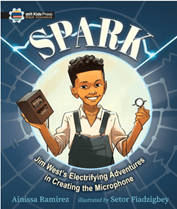
InSPARK: Jim West’s Electrifying Adventures in Creating the Microphone, book 1 of MITKids Press’ The Black Innovators series, author and materials scientistAinissa Ramirez and illustrator Setor Fiadzigbey tell the life story of Jim West, a curious, irrepressible African-American answer-seeker who grew up to become scientist and inventor, who among many other useful inventions perfected the microphone we still use today. (MITPress, 2025)
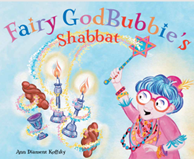
In Fairy GodBubbie’s Shabbat, author/illustrator Ann D. Koffsky suggests turning off tech devices and enjoying a dinner, a game, and a walk in the neighborhood with family on Shabbat, the Jewish day of rest. You don’t have to be Jewish to know that enjoying warm family time is a good thing and the fairy G0dBubbie will show you how! (Intergalactic Afikomen, 2025)
AUGUST 2025
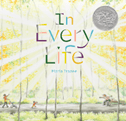
If you need a gift for a new parent, this blessing of a book is the one. In In Every Life, Marla Frazee’s awesome art parallels the call and response of a baby naming prayer in all its beauty and wonder from opening vignette to astonishing closing spread. (Beach Lane Books, 2023)
JUNE 2025
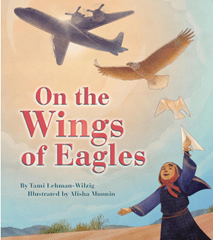
On the Wings of Eagles: Endangered Jewish Yemenis believed a Biblical prophecy would get them to Israel in 1949 when they were expelled from their home country. But the predicted eagles’ wings turned out to be frightening planes. Tami Lehman-Wilzig tells Haila’s story of Operation Magic Carpet in moving detail, w/ gorgeous art by Alisha Monnin. Highly recommend. (Apples & Honey, 2025)
MAY 2025
Living in America is not easy when you’re a homesick Israeli tween. In Noa Nimrodi’s Not so Shy, Shai tries everything to get back home, along the way making friends and finding out that maybe America isn’t so bad. Highly recommend. (Kar-Ben, 2023)
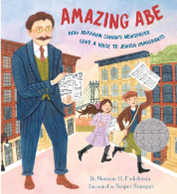
Norman Finkelstein tells Abraham Cahan’s story in Amazing Abe: How Abraham Cahan’s Newspaper Gave a Voice to Jewish Immigrants. A lover of languages, Abe fled the Russian Empire and came to America, where he taught Jewish immigrants to speak English, wrote for newspapers, and founded the largest Yiddish language newspaper at the time – the Forverts (Forward) to help countless Jews acclimate to their new country. His column, ABintel Brief, was the Dear Abby of its time. My own grandfather wrote to the paper (in beautiful hand-written Yiddish) and received an answer (in Yiddish). Artist Vesper Stamper deftly illustrates the time. Should be in every school library. (Holiday House, 2024)
Jacqueline Jules’ Drop by Drop: A Story of Rabbi Akiva is an inspirational story about learning to read late in life with the encouragement of a loving family member. Although poor and illiterate, Akiva’s wife Rachel urged him to learn to read at age 40, then to study Torah. The humble shepherd listened to his wife and became the famed and revered Rabbi Akiva, one of Judaism’s greatest sages. Yevgenia Nayberg’s beautiful art enhances the tale. Highly recommended for all. (Kar-Ben, 2017)
APRIL 2025
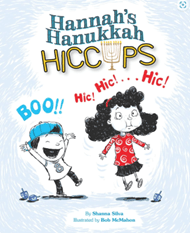
Hannah’s Hanukkah Hiccups: Shanna Silva tells the story of Hannah whose hiccups persist despite a variety of cures suggested by her family and diverse neighbors. When the hiccups threaten her Hanukkah solo, Hannah must quickly improvise a solution on the night of the concert. Children will relate to this amusing family story with humorous art by Bob McMahon. (Apples & Honey, 2018)
When King Solomon admits he doesn’t always know how to comfort a sad citizen or humble a proud one, Ezra, his servant boy, tries to help. Little does he know that a gold ring has the answer. With amazing art by D. Yael Bernhard, A Ring for a King is a hopeful and uplifting tale for our times. (Wisdom Tales, 2025)
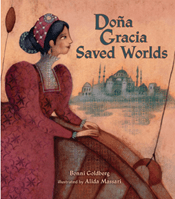
Doña Gracia Saved Worlds by Bonni Goldberg: Doña Gracia, a woman and a Jew in 16th century Portugal, used her wealth to help fellow secret Jews escape the king and the Spanish Inquisition. Gorgeous art accompanies this story of bravery, defiance, and heroism. This bio belongs in every school library. (Kar-Ben, 2023)
In This is Not a Cholent! Amira and her Nana compete in Australia’s annual cholent contest while dubious onlookers point to the chicken, rice, and fragrant spices and declare, “That’s not a cholent!” What will the judges think? Sarah Sassoon introduces readers to the joys of Iraqi cooking in this sweet story that honors an ages old tradition. With lively art from Viviana Garofoli, this book is a winner. (Kar-Ben, 2025)
JANUARY 2025
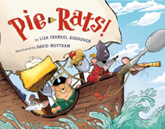
Lisa Riddiough’s Pie-Rats! proves that stories can be told in well-metered, surprising rhyme. When a crew of “pie-rats” sail to sea in search of their favorite dessert – PIE, PIE, PIE, PIE!, they are disconsolate to find someone has gotten to their treasure first. But all ends well for these hungry rats when… well, you’ll have to read it to find out. Art by David Mottram is a banquet for hungry eyes. (Viking, 2024)
DECEMBER 2024
Kai Po Che: Mini’s Perfect Kite by Suhasini Gupta with bold art by Debika Oza, is a testament to the determination of little girls while educating “others” about the Indian Festival of Sankranti. Back matter enhances the learning with information about the magic and flying of kites. (Gnome Road Publishing, 2025)
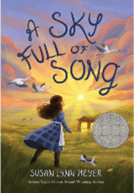
A Sky Full of Song: In this 2024 Sydney Taylor Book Award winner for MG fiction, 11-year old Shoshana, her sisters and mother flee the pogroms and conscription of the Russian Empire in early 1900 to rejoin her father and brother who have been homesteading in North Dakota for 2 years. On the magnificent yet often terrible prairie, Shoshana has gone from a life among Jews in the shtetl to being the only Jewish family for miles. She experiences language difficulties, brutal antisemitism, and her own struggles with her identity. A beautiful story that parallels the Russian government’s treatment of Jews with the American government’s treatment of the original prairie dwellers – the First Nations. (Union Square Kids, 2024)
NOVEMBER 2024
In the library there’s a guitar lady, computer games, toys, books, and a man who looks just like pop-pop. But he’s homeless and in Not Pop-Pop by Angela De Groot and MacKenzie Haley, young Brian learns about compassion and treating others with dignity. Backmatter adds ways to help the homeless and discuss the topic. (WaterBrook/Random House, 2024)
Jonah Winter and Stacy Innerst tell the story of Ruth Bader Ginsburg: The Case of R.B.G. vs. Inequality, a Jewish girl from Brooklyn who grows up to become a lawyer, a judge, and then a Supreme Court justice all the while overcoming obstacles of gender, religion, and being smarter than the boys. With her leadership, laws were passed to combat this inequality. A must read for all. (Abrams Books for Young Readers, 2017)
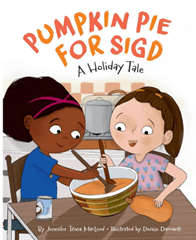
In Pumpkin Pie for Sigd, author Jennifer Tzivia MacLeod and illustrator Denise Damanti tell how Maddie, an American transplant to Israel, dispels her homesickness by trying to bake a pumpkin pie with her new Ethiopian friend. The result is shared by both families at the Ethiopian-Israeli holiday of Sigd. (Apples & Honey Press, 2021)
OCTOBER 2024
Janie Emaus’ Latkes for Santa Claus is for families who celebrate both Hanukkah & Christmas. As part of a blended family, Anna’s problem is what to leave Santa on his 1st visit to her home instead of the same old sugar cookies. Matzo ball soup? Noodle kugel? Tzimmes? Bryan Langdo’s bold art welcomes the reader into a home full of love, friendship, and the symbols of both holidays. Don’t read this book hungry! (Sky Pony Press, 2020)
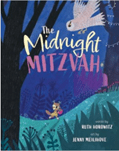
Author Ruth Horowitz deftly turns a Talmudic teaching about charity into The Midnight Mitzvah, featuring a brave and kind chipmunk who helps an aging squirrel, complimented by Jenny Meilihove’s bold and colorful artwork. (Barefoot Books, 2024)
SEPTEMBER 2024
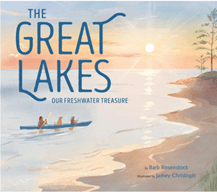
In The Great Lakes: Our Freshwater Treasure, master of nonfiction Barb Rosenstock asks what if you were a drop of water? Using captivating and simple language, the reader follows that drop’s lifecycle, while we learn about the creation, life, decline, and rebirth of the Great Lakes, with every page and fact enhanced by Jamey Christoph’s captivating watercolor art. Recommended for every classroom. (Knopf Books for Young Readers, 2024)
AUGUST 2024
Debby Waldman’s A Sack Full of Feathers is about telling tales w/out substantiation or waiting till the full story unfolds. Told in a child-friendly way, this is an excellent intro to a discussion on the harms of gossip. (Orca Book Publishers, 2007)
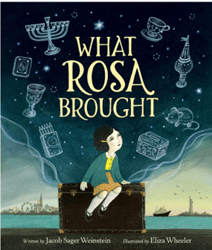
What Rosa Brought: A touching and eye-opening story of antisemitism, choice, family and love written by Jacob Sager Weinstein, son of the title character. In spare, well-chosen text and art by Eliza Wheeler that adds more to the story, Weinstein tells of Rosa’s life in Vienna before and after the Nazis invaded – when everything changed. Recommended for every classroom. (Katherine Tegen Books, 2023)
JULY 2024
I See Color spotlights people of many colors who have made a difference in how people of many races are seen and treated from Martin Luther King Jr. to Madonna Thunder Hawk. With artwork by Laylie Frazier, it is a must for every classroom. I only wish the co-authors had spotlighted a more contemporary Jewish advocate. (HarperCollins, 2024)
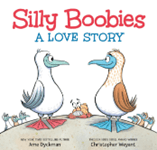
Ame Dyckman’s irrepressible humor is apparent in Silly Boobies, a fairy tale love story between star-crossed boobies, one with blue feet and one with red. Despite family objections they get together with an adorable outcome. Christopher Weyant’s cartoon-like art adds to the fun. All you need is love! Highly recommend. (Two Lions, 2024)
MAY 2024
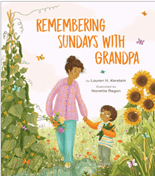
When a child mourns the loss of his grandfather, his mother helps him cope by pointing out all the ways he can remember his grandfather’s love. In Remembering Sundays with Grandpa, author Lauren Kerstein’s gentle prose pinpoints specific memories, while artist Nanette Regan supplies warm illustrations. Together they have created a primer for any caregiver hoping to help their child cope with loss and grief. (Beaming Books, 2023)
In The Lion in Your Heart, author R.C. Chizhov gives caregivers a way to soothe a frightened child by having them they are the king of the jungle. No matter what situation they find themselves in, conjuring up the lion will bring on the bravery. A lion itself can be frightening, but art by Anil Yap makes it an encouraging and smiling creature. (Blissful Conch LLC, 2021)
APRIL 2024
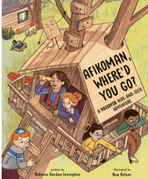
Afikoman, Where’d You Go? Looking for a new Passover book? Here’s Rebecca Gardner Levington’s lively mystery that engages children in the pursuit of the elusive after-seder “afikoMAN.” This perfect rhyming read-aloud is accompanied by Noa Kelner’s detailed, amusing, and engrossing art. (Rocky Pond, 2024)
Passover Scavenger Hunt in which Shanna Silva and Miki Sakamoto introduce us to young Rachel who wants to make the search for the afikomen more fun. Rachel’s scavenger hunt clues teach about the seder plate and add fun to the seder. Maybe your family will do it too! (Kar-Ben, 2017)
MARCH 2024
Translated from Hebrew, Who Will Ask the Four Questions? by Naomi Ben-Gur, is an ageless tale of sibling rivalry that can happen in any family, at any event, not just the Passover seder. An excellent lesson in compromise, problem solving, and working together to achieve a goal. (Green Bean Press, 2020)
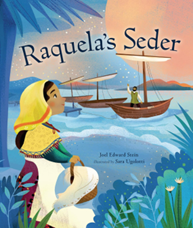
Raquela’s Seder: In Spanish-Inquisition Spain Jews at point of death must either stop practicing Judaism, convert, or leave Spain. Joel Edward Stein’s gently told fictional story recounts how a clever father circumvents the ruling power’s decree to give his daughter the seder she yearns for. (Kar-Ben, 2022)
FEBRUARY 2024
An Accidental Hero: A Mostly True Wombat Story: Inspired by the wildfires in Australia and the actual actions of wombats, Laura Roettiger tells the story of one kind and community-minded creature who sheltered other species of animals who lost their homes. With adorable and expressive art by Debbie Palen. (Eifrig Publishing, 2024)
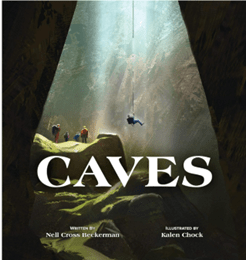
Caves: Nell Cross Beckerman’s poetic ode to caves illustrated by Kalen Chock is a masterpiece of author-illustrator magic. This book will compel the reader to explore caves both in books and in person. (Orchard Books, 2022)
JANUARY 2024
Sound Switch Wonder: Inspired by their own experience, mother and father and authors, Dr. Christine Ko and Owen Whang, write about their deaf son’s experience in the world and try to teach us what “no sound” is like. With sweet illustrations by Katie Crumpton, this book would be a helpful teaching tool in both classrooms and doctors’ offices. (West Margin Press, 2023)
The Sundown Kid: A Southwestern Shabbat: “Too much soup. Not enough family,” Mama laments on her 1st Shabbat out west. Barbara Bietz tells the story of how a Jewish family changes their lonely Shabbats into festive affairs by inviting the community to join them. Warm art by John Kanzler. (August House, 2017)
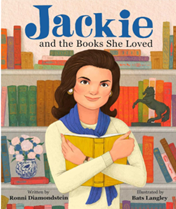
Jackie and the Books She Loved: Ronni Diamondstein’s lyrical tribute to one of our most famous First Ladies and the books she loved which led to her career after politics. With artwork by Bats Langley. (Sky Pony, 2023)
A Book for Bear: In Ellen Ramsey’s tale Bear and a little girl, Ellen, try to figure out how Bear can find his own book. Friendship, kindness, and ingenuity are modeled between the two. MacKenzie Haley’s art is a perfect match to this charming debut. (Flamingo, 2023)
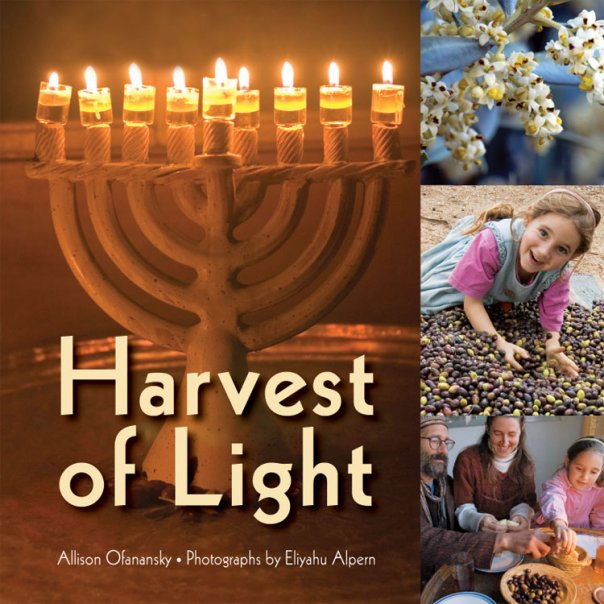
Harvest of Light: Allison Ofanansky’s delightful story of growing olives and making olive oil in Israel told lyrically, lovingly, and photographically. (Kar-Ben 2011)
Can Little John Find a Way? Christina Williamson’s charming story of brotherly affection that models the encouragement an older sibling might offer a younger one. Mateo Cardo’s bright and lively art captures the emotions of the many creatures in the story. (Gatekeeper Press, 2023)
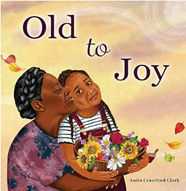
Old to Joy: Debut author-illustrator Anita Crawford Clark’s book is a joyful celebration of old things as seen through the eyes of a child who isn’t afraid to speak her mind. Warm and bold art illuminates the relationship between grandmama and child. (Gnome Road Publishing, 2023)
Beatrice Bly’s Rules for Spies: The Missing Hamster: 1st in the Beatrice Bly superspy series. Spunky Bea solves mysteries in school with bright and bold art by Beth Mills. What’s next for Bea? (Pixel + Ink, 2023)
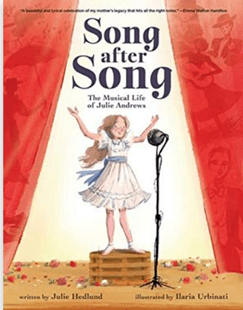
Song After Song: The Musical Life of Julie Andrews: From Julie Hedlund here is the lyrical and melodic bio of the megastar born Julia Wells in a tiny English village. Romantic art by Ilaria Urbinati. (Little Bee Books, 2023)
How the Dinosaurs Went Extinct: A Safety Guide: Dad explains how dinos disappeared (didn’t wear a helmet, swam after eating, played with matches). Daughter buys it all. Fun story by Ame Dyckman. Energetic art by Jennifer Harney. (Little, Brown Books for Young Readers, 2023)
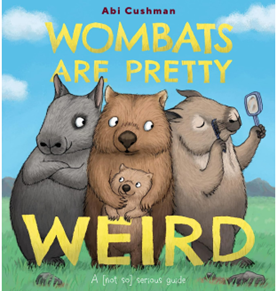
Wombats Are Pretty Weird! Abi Cushman humorously shows and tells all we need to know about these unique animals, square poop and all. (Greenwillow Books, 2023)
Lupe Lopez: Rock Star Rules! Kindergartener Lupe has no fear of 1st day of school. She’s a rock star and she’s gonna show it – despite stuffy school rules. e.E. Charlton-Trujillo, Pat Zietlow Miller, and Joe Cepeda combine for a hit!
The Child and the Tree: A child forms a relationship with a tree, repairs it, takes care of it, and learns from it. Its gift: seeds for replanting in the child’s new home.
Brand-New Bubbe: When a new marriage adds a new grandma, little Jillian isn’t so sure. Is there room in her heart for three? Cooking together helps Jillian accept her brand-new Bubbe.
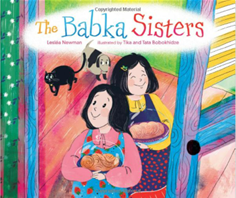
The Babka Sisters: New neighbor stimulates sisters Hester and Esther to bake him the best babka in the world. Lesléa Newman and artist sisters Tika & Tata Bobokhidze combine to produce a charming story that introduces the world to babka. Includes recipe.
Bathe the Cat: Grandma’s coming. Time to clean up. Daddy’s list includes “Bathe the cat.” But the water-averse tabby has other ideas. She messes with Daddy’s list on the refrigerator resulting in hilarity, wordplay, confusion, and fun. If you wonder what a perfect picture book is, this is it. David Roberts’ art complements and enhances Alice B. McGinty’s lively, rhyming text. Even the stuffies look worried.
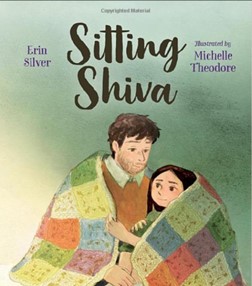
Sitting Shiva: Loving gentle text by Erin Silver plus calming art by Michelle Theodore offer a sensitive account of the Jewish ritual of mourning. Each element of sitting Shiva is explained in a way a child can understand. This book has already won several awards.
With Lots of Love: When children move, they will miss much about the old place. Rocio is no different. She misses her Abuela’s pinatas, cooking, and hugs full of love. But when her birthday arrives, so do gifts from her beloved Abuela that remind her that love isn’t that far away. With lively artwork from Andre Ceolin, Jenny Torres Sanchez’s lyric prose that mixes Spanish and English helps soothe the longing.
It’s A … It’s A … It’s A Mitzvah: In which acts of loving kindness are demonstrated by a gang of lovely animals drawn by Laurel Monk, written by Liz Suneby and Diane Heiman.
If I Had a Unicorn: A child’s visit to a museum where she admires a medieval tapestry of a unicorn in captivity sparks her curiosity. What would she do if she had a unicorn. Told in rhyme and illustrated with humor, by Gabby Dawnay and Alex Barrow.
2022
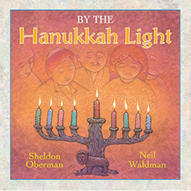
By the Hanukkah Light by Sheldon Oberman, illustrated by Neil Waldman, in which a grandfather parallels the ancient Hanukkah story with events of WWII – proving Hanukkah’s relevance and significance in modern times.
Ride, Roll, Run: I was fortunate to be in a read-aloud for this new Valerie Bolling book. The children were engaged and anxious to share their own favorite outdoor games – and ready to go out and move!
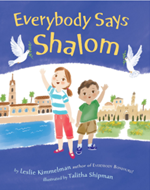
Everybody Says Shalom by Leslie Kimmelman in which a visiting family discovers the many cultural, religious, agricultural sides of Israel while saying “hello,” “goodbye,” or “peace.”
Cow Says Meow by Kirsti Call with art by Brandon James Scott, in which an ever growing and infuriating collection of animals speak in the wrong language accompanied by puns and onomatopoeia.
Over, Bear! Under, Where? by Julie Hedlund with art by Michael Slack is neither over-done nor under-done, but is a heartwarming tale of making a new friend.
Hanukkah Haiku by Harriet Ziefert describes the food, family, and fun of Hanukkah. The Marc Chagall-inspired artwork by Karla Gudeon give this book an extra kick.
I Miss My Grandpa by Jin Xiaojing in which a young girl finds out how like her unknown grandpa she is.
Don’t Sneeze at the Wedding by Pamela Mayer and art by Martha Aviles in which a young flower girl gets dubious advice from one and all on how to stifle her sneeze at her aunt’s wedding.
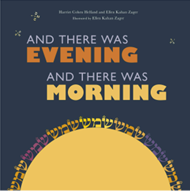
And There was Evening and There was Morning by Harriet Cohen Helfand and Ellen Kahan Zager (who also illustrated) in which the Biblical 7-day creation story is told in rhyme and amazing artwork.
Tofu Takes Time: In which a granddaughter and grandmother make tofu together. The little girl learns patience and all the complex elements that go into making a dish. Gently illustrated by Julie Jarema.
Nathan’s Song by Leda Schubert, art by Maya Ish-Shalom: A Jewish immigrant’s story.Good Boy, words and art by Sergio Ruzzier: A relationship between a boy and his dog. In the end we aren’t quite sure: who the good boy is exactly.
Where Lily Isn’t by Julie Paschkis, art by Margaret Chodos-Irvine: Grieving a lost pet.
Mom’s Sweater, words and art by Jayde Perkin: Dealing with grief over a lost mother (originally published in Great Britain).
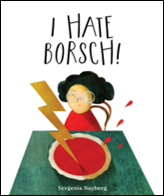
I Hate Borsch! words and art by Yevgenia Nayberg: Oh, how she hates, then comes to love a traditional soup of her ancestors.
Tashlich at Turtle Rock, Susan Schnur, et al, art by Alex Steele-Morgan: One family’s Rosh Hashanah tradition of tossing their sins in the water.
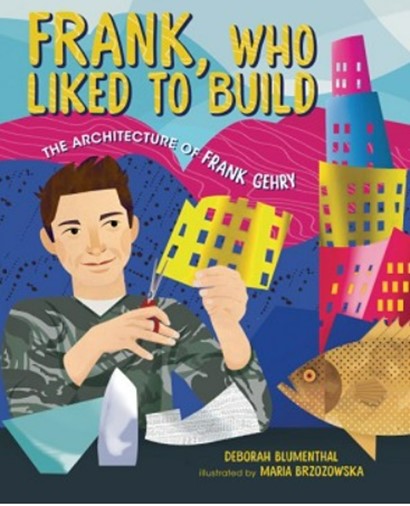
Frank, Who Liked to Build, by Deborah Blumenthal, art by Maria Brzozowska: The life of Jewish-Canadian architect Frank Gehry.
Bug on the Rug by Sophia Gholz, art by Susan Batori: Rhyming story of sharing and friendship.
Bedtime for Maziks by Yael Levy, art by Nabila Adani: A day in the life of a mazik (Yiddish for imp) is described in rhyme.
Too Many Pigs in the Pool by Wendy Hinote Lanier, art by Iris Amaya: A cautionary tale of swine and swimming
Rena Glickman, Queen of Judo by Eve Nadel Catarevas, art by Martina Peluso: The Jewish woman whose love and skill of Judo gets the sport in the Olympics for women.
The Princess of Borscht by Leda Schubert, art by Bonnie Christensen: A child makes borscht for her hospitalized grandmother with dubious help from her neighbors.
I just spent a most disheartening hour researching agents. The agent I’d been stalking for almost two years sent me her latest “no thank you” yesterday and since that’s the third strike, I’ve decided it’s time to move on.
I have a database with 175 agent names. I love databases. They are orderly and have lots of information. But they are not static things. They are always in flux – agents leave the business, move to another agency, open their own agency, stop accepting submissions. So it’s a thing that must be maintained, managed, and manipulated. Databases don’t complain. I can massage them without a peep of resistance.
I researched twelve agents in my database today. Not one turned out to be someone I would or could reach out to. Here are my results: Four are closed, three don’t want picture books, two were illustrator only, and I rejected three for other reasons (cavalier attitude on MSWL, not enough information on what she’s looking for, and, let’s just say, other). Can I relate that to my work? If I have a dozen stories, is any one publisher or agent out there going to be interested in just one of them? Or conversely, if I send one story to twelve editors, will not even one editor fall in love with it?
I will wend my way through this maze of information and research more agents tomorrow and the next day until I find one who seems simpatico. But until then I will continue doing what I’ve been doing: Being my own best agent.
I am NOT an aspiring writer. I AM a writer. I write stories for children, haikus, letters to the editor, blogs, and queries. I don’t aspire to write these. I just do it.
According to Webster’s to aspire is to hope to achieve something. Do you “aspiring” writers hope to achieve writing? I don’t think so.
I think the hope is that we become published writers. We believe this feat is validation that we are indeed writers. This victory must mean that our words have won over the gatekeepers: an agent, an editor, a team at the acquisition meeting. Oh, how our hopes have turned to reality. Now we are truly writers.
It also means that since I am published, I can remove “aspiring” from my Twitter or Facebook profile. No.
You are defeating yourself by saying you are an aspiring writer. You know the art and craft of writing. You use luscious language, you leave room for the illustrator, you use a combination of short and long sentences, you have a theme, an arc, all the elements. You go to your desk every morning or when you can. You type words into your computer. You revise. You revise some more. You think about your work in the shower, on your walks, in the grocery store, in your dreams.
Guess what that means? You are a writer. No “aspiring” necessary. You don’t need validation from the gatekeepers. You only need it from yourself.
Saying you are an aspiring writer is begging. It’s a psychological deterrent. A writer’s block. Does a musician call him or herself aspiring? When she practices a Bach two-part invention over and over, does she say I am an aspiring pianist? I hope she does not. Does an artist call herself aspiring before she has a show or sells her art? I think not.
So don’t ASPIRE to be a writer. Just DO it. The joy is in the doing. Stop hoping that you are a writer and start believing that you are a writer. I promise it will give you strength.
There are many reasons to stop working on a story. You may have run out of ideas. You may have recognized that the message and the medium don’t match. Another story has come barreling into your consciousness and you feel you must work on that. Another way of saying what you meant to say has come to you and you are compelled to follow that thought. And I have also heard, “I’ve spent a lot of time on this already,” throwing poor “time” under the bus. I didn’t realize there was a time limit.
A published author was once asked, “How long does it take you to write a picture book?” Her answer was, “It depends. Some take a month, some take three months, some take three years. In other words, they take as long as they take.” And time you’ve already spent creating cannot be one of the reasons why you abandon a book.
I understand that time is a special commodity. For parents who work out of the home or in, sometimes the only time you have to work on a book is after the work is all done and the kids are in bed. And time becomes a balancing act. Should I work on something that’s just not coming or should I put my time against something that’s working out just beautifully? This is a decision every writer has to make. If a manuscript is giving you trouble, don’t claim time’s up and abandon it. Time shouldn’t be the excuse. Simply put it away and let it age. Your back burner brain will be working on it. You can always come back to it later. And maybe when age has had its way with it you may realize what a dumb idea it was or what a great idea it was and you’ll put more time against it.
Or you may simply realize that for whatever reason this story just isn’t going to work the way you hoped. I was trying to write a story about a rainbow. But my treatment goes against the whole world’s concept of rainbows as being miraculous, joyous, hopeful things. And as much as I think my story is funny and clever, I don’t think anyone would buy it. Too irreverent. I may have put a lot of time against this story and its many revisions, but I would never say I won’t work on it anymore because of the time spent. It was well spent. It was time spent learning the craft of writing picture books in general rather than that story in particular.
Time is not the excuse. Theme, structure, plot, character development, tone. These are the reasons a story works or doesn’t work and if these elements aren’t working then they are the proper “excuses” for abandoning a story.






 The Literate Cat